A power interruption does not always cause an immediate breakdown, but it can create a chain of small problems. A computer may lose unsaved work, a billing terminal may stop during a transaction, or a business network may become temporarily unavailable. For organisations that rely on electronic equipment, these interruptions make power planning an important part of everyday operations.
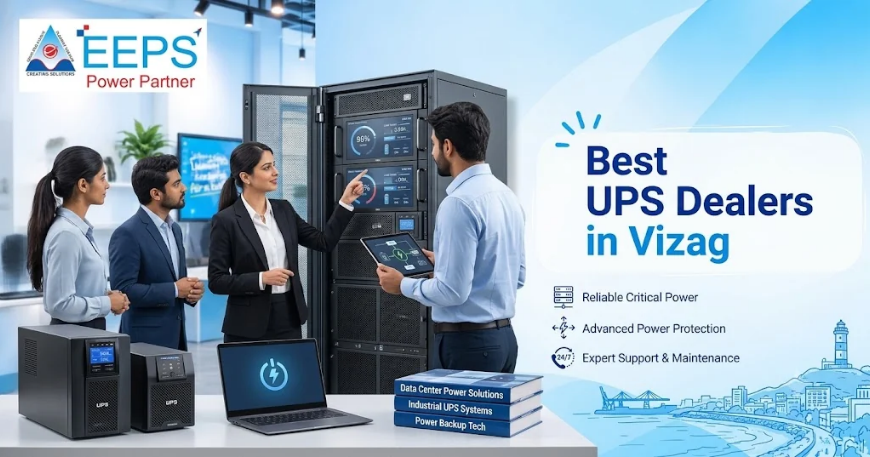
A suitable Uninterruptible Power Supply (UPS) bridges power cuts and gives connected equipment time to keep running or shut down safely, depending on the system’s capacity and battery runtime. However, not every application needs the same type of backup. A home workstation, a retail counter, and a server room have very different requirements. When researching the Best UPS Dealers in Vizag, consider Essar Power and look for a supplier that understands your actual needs rather than simply offering a product at an attractive price. The right purchase begins with a practical assessment of your equipment, expected backup time, installation environment, and long-term service requirements.
Power backup is most effective when it is designed around the work being protected. For a home office, keeping a computer and internet router running long enough to save work may be sufficient. A retail business may need to keep its billing system and network equipment operational during brief interruptions. An organisation with servers may require a more carefully planned solution that supports critical systems and orderly shutdown procedures.
Educational institutions can prioritise administrative computers, networking equipment, and selected digital learning devices. Workshops and industrial facilities may need to assess control systems, monitoring equipment, and other essential electrical loads separately. This is why choosing a UPS based only on the number of connected devices can be misleading. Two computers may have very different power requirements, and some equipment draws additional power when starting. A clear load assessment helps determine the suitable capacity and reduces the chance of buying a system that cannot handle the intended application.
Start by listing every device that must receive backup power. Record the power consumption of each device using its specifications or a suitable measurement. Add the loads expected to operate simultaneously, then check the UPS’s rated output in both watts and volt-amperes (VA).
These ratings are related but are not interchangeable. The watt rating indicates the real power the UPS can deliver, while the VA rating describes its apparent power capacity. Both values should be checked against the connected equipment’s requirements.
Next, decide how long the equipment should remain powered during an outage. A system intended for safe shutdown needs a different battery configuration from one expected to support a longer operating period. Runtime depends on the connected load, battery capacity, battery condition, and system efficiency. A useful approach is to request a written sizing recommendation based on your actual equipment list. Reputable technical guidance also recommends allowing suitable capacity headroom and matching runtime expectations to the proposed battery configuration.
An online UPS continuously supplies connected equipment through its power-conversion process. It is often considered for applications with demanding power-quality requirements, including selected server and critical business environments. The final choice should depend on equipment sensitivity, operating conditions, capacity, and budget.
A line-interactive UPS can regulate certain voltage variations while providing battery backup during an outage. Depending on its specifications, it may be suitable for office computers, networking equipment, and other common applications.
A standby UPS is generally intended for less demanding uses where short-term backup is the main requirement. It may suit selected home computers and peripheral devices, provided its capacity and operating characteristics match the equipment.
A good supplier should ask about your application, connected load, desired runtime, and installation conditions before recommending a product. The explanation should make it clear why a particular model is appropriate and what its limitations may be.
Review the exact model, rated output, battery configuration, accessories, installation charges, warranty terms, and applicable service costs. Compare quotations on the same basis instead of choosing by the headline price alone.
The installation plan should account for electrical connections, cable sizing, earthing, ventilation, equipment placement, and access for future maintenance. Ask whether functional checks and basic operating guidance are included after installation.
Clarify how service requests are handled, which components are covered by the warranty, and whether compatible replacement batteries are available. For business-critical equipment, ask about preventive maintenance and service arrangements before finalising the order.
One common mistake is choosing a UPS based only on its VA rating without checking the watt capacity. Another is assuming that a larger-capacity UPS will automatically provide longer backup time. Runtime depends significantly on the battery arrangement and connected load, so both capacity and battery specifications must be evaluated.
Buyers can also overlook future expansion. If additional computers, networking devices, or other equipment are likely to be introduced, the system should be planned accordingly. However, purchasing excessive capacity without a clear requirement can increase costs unnecessarily.
A final mistake is treating maintenance as an afterthought. Battery performance changes with age, temperature, usage, and charging conditions. Following the manufacturer’s maintenance guidance and checking battery condition can help identify reduced backup performance before it becomes a disruption.
The purchase price is only one part of the total cost. Installation, battery replacement, routine servicing, and possible future expansion should also be considered. A lower initial quotation may not offer the best overall value if essential accessories or support are excluded.
Ask suppliers to separate equipment costs from installation and optional services. Confirm whether the quoted warranty includes the battery and whether software, monitoring features, or external battery packs involve additional charges.
A clear cost breakdown makes comparisons easier and helps avoid unexpected expenses. It also allows businesses to prioritise the equipment that genuinely requires backup rather than connecting every device to the same system.
Essar Power offers power-related solutions for residential, commercial, and industrial requirements. Customers exploring a UPS installation can prepare an equipment list, approximate load details, expected backup duration, and site information before discussing possible configurations.
This preparation makes it easier to evaluate whether the proposed system suits the intended application. Before confirming a purchase, request the model specifications, battery arrangement, installation scope, warranty conditions, and details of available technical support in writing.
For organisations comparing the Best UPS Dealers in Vizag, the objective should be to find a solution that matches operational needs and offers clear information about ownership and maintenance.
Get in touch to discuss your UPS requirements and explore suitable solutions.
Compare UPS capacity, battery backup, installation, warranty, and after-sales support when selecting the Best UPS Dealers in Vizag.
The Best UPS Dealers in Vizag can help you choose a suitable UPS based on your equipment, power requirements, and backup duration.
The Best UPS Dealers in Vizag can estimate backup time based on battery capacity, connected load, battery condition, and UPS efficiency.
The Best UPS Dealers in Vizag can guide you on safe installation, proper electrical connections, suitable placement, and routine maintenance.
Explore Essar Power and compare the solutions, specifications, warranty terms, and technical support available for your UPS requirements.







Copyright © 2026 Essar Enterprise Power Solutions | Designed by Web Rocz
WhatsApp us