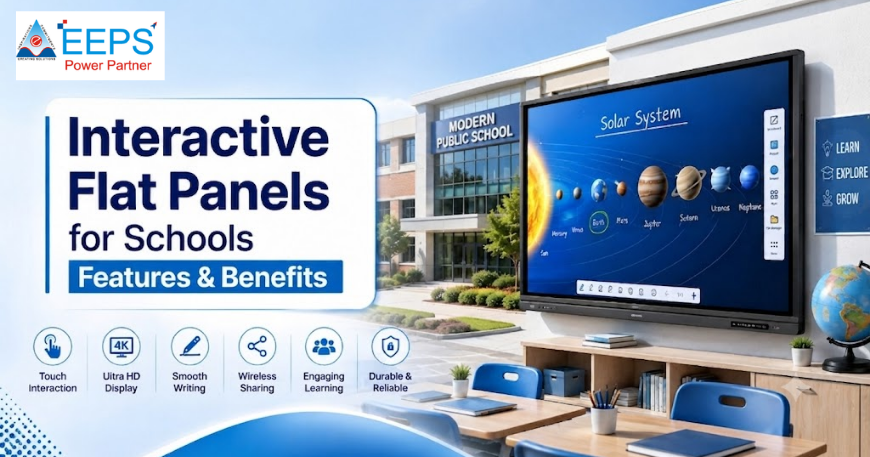
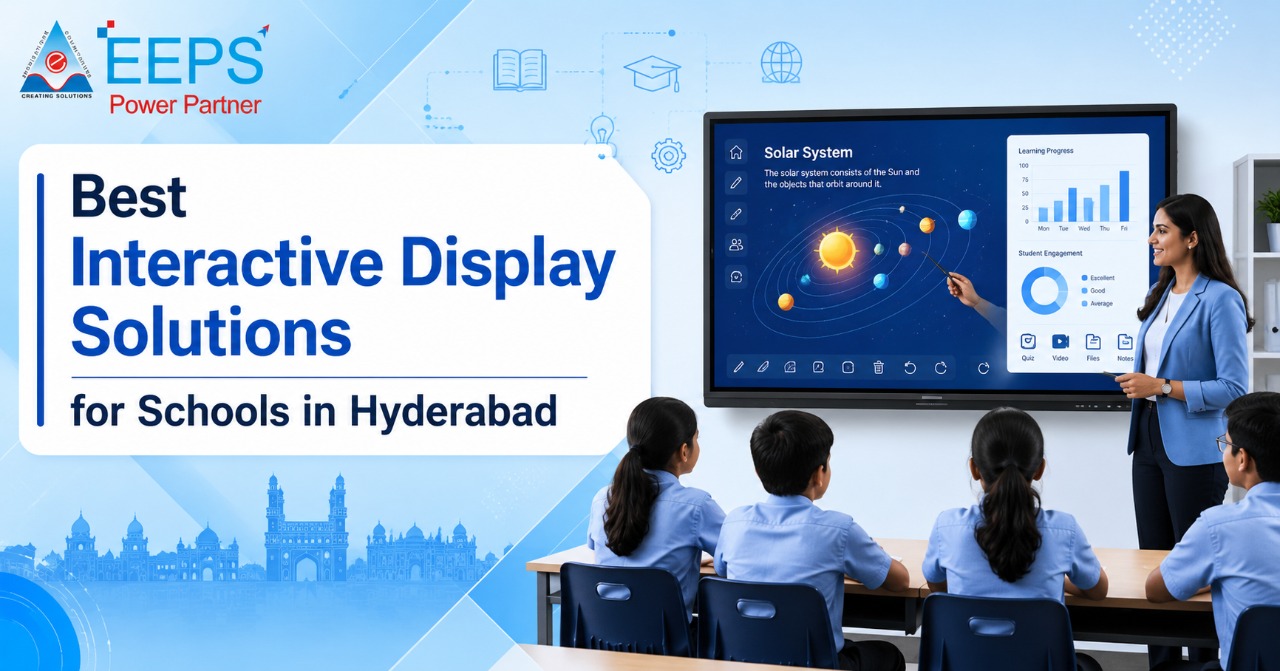
Technology is transforming the way teachers deliver lessons and students engage with educational content. Modern classrooms are moving beyond traditional boards by adopting digital tools that encourage participation, visual learning, collaboration, and interactive teaching. Interactive Flat Panels for Schools provide an effective way to bring these capabilities into everyday classroom activities.
These advanced displays combine a large digital screen with touch functionality, multimedia support, annotation tools, and connectivity options. Teachers can present lessons, explain concepts visually, display videos, access digital resources, and interact directly with content on the screen. Essar Power provides technology solutions designed to help educational institutions create modern, interactive, and digitally enabled learning environments.
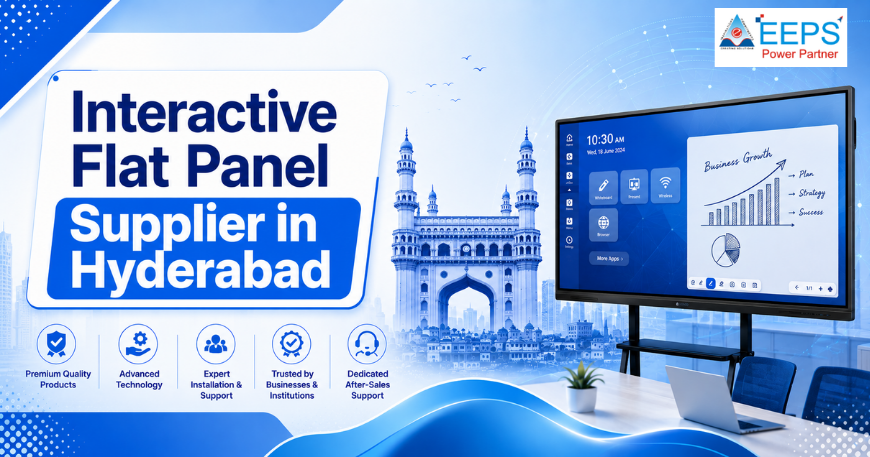
Interactive flat panels are large touchscreen displays designed for classrooms, presentations, collaboration, and digital learning. Instead of simply displaying information, they allow teachers and students to interact directly with the content.
Teachers can write, draw, highlight information, move objects, open applications, display educational videos, and work with digital resources directly from the panel. Students can also participate in classroom activities through touch-based interaction.
The combination of a large display and interactive functionality makes these panels suitable for schools looking to modernise their teaching infrastructure.
A clear, high-resolution display ensures that text, diagrams, photographs, presentations, and videos can be viewed comfortably across the classroom. This is particularly useful for larger classrooms where every student needs a clear view of the lesson.
Touch functionality allows teachers to interact naturally with digital content. Writing, drawing, selecting, moving, and annotating objects can be performed directly on the screen, making lesson delivery more dynamic.
Multi-touch technology allows multiple points of interaction on the display. This can support group activities where more than one student participates at the same time.
Teachers can annotate presentations, documents, diagrams, images, and other digital resources while explaining a topic. Important information can be highlighted or marked in real time.
Images, videos, animations, presentations, and other digital resources can be incorporated into lessons. This gives teachers greater flexibility when explaining subjects and concepts.
Interactive panels can connect with computers, laptops, networks, and other compatible devices. This allows teachers to access different sources of educational content from one classroom display.
One of the biggest advantages of digital classroom technology is its ability to make lessons more engaging. Teachers can combine written explanations with images, videos, animations, diagrams, and interactive activities.
This variety can help maintain student attention and create a more dynamic classroom environment.
Interactive learning gives students opportunities to become active participants. Instead of simply listening to a lesson, students can answer questions, solve problems, write on the screen, interact with educational applications, and contribute to group activities.
Interactive Flat Panels for Schools can therefore support a more participatory approach to classroom learning.
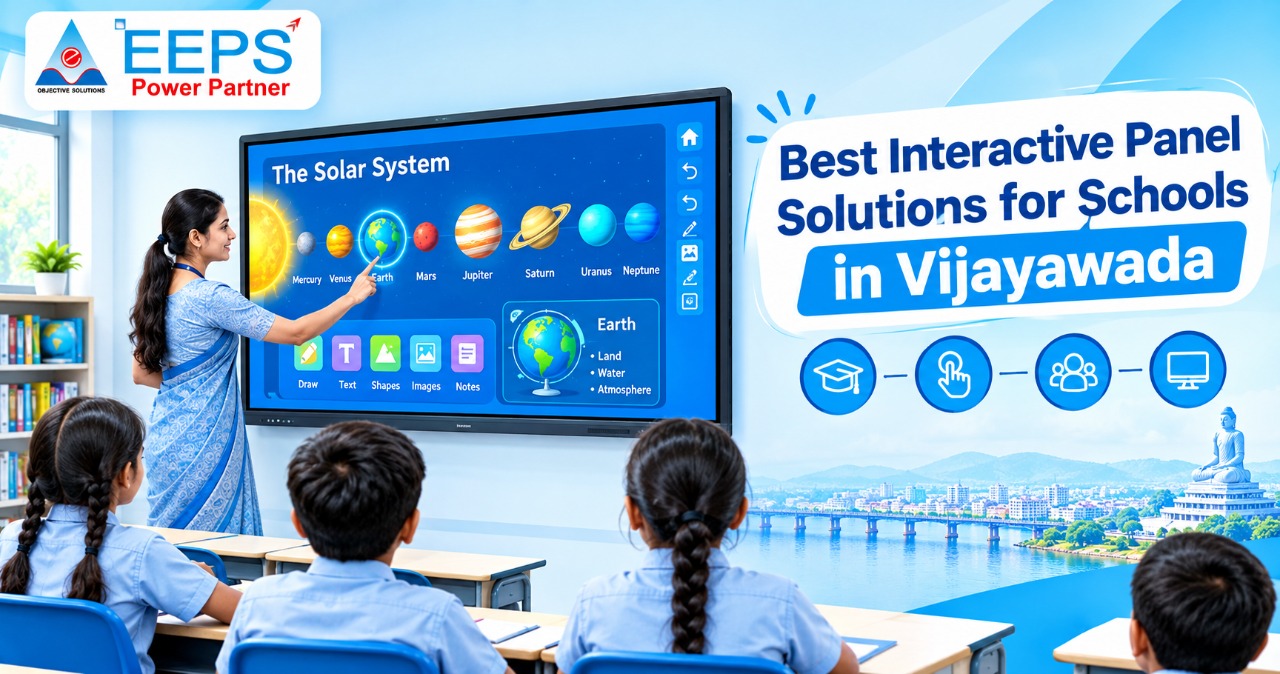
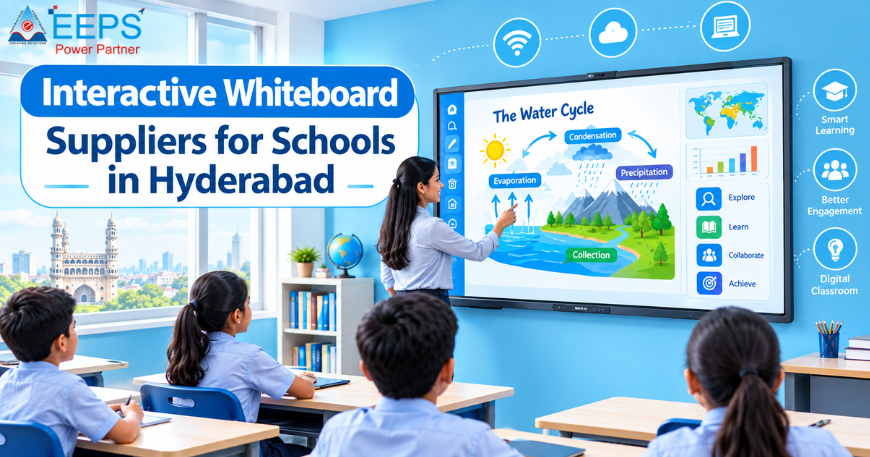
Some subjects and concepts are easier to understand when presented visually. Teachers can use diagrams, charts, maps, animations, and videos to explain complex topics.
Visual demonstrations can be particularly useful for subjects such as science, mathematics, geography, and technology.
Every classroom has different teaching requirements. Digital panels allow teachers to switch between presentations, digital writing, videos, interactive exercises, and other learning resources.
This flexibility helps educators adapt lessons according to the subject, student group, and learning objectives.
Interactive flat panels can be used across almost every academic subject. In science classrooms, teachers can display diagrams, experiments, simulations, and educational videos. Mathematics teachers can use digital tools to demonstrate equations, graphs, geometry, and problem-solving techniques.
Language classes can incorporate digital reading materials, vocabulary activities, videos, and writing exercises. Geography lessons can benefit from maps, satellite imagery, and visual presentations. History and social science teachers can use photographs, timelines, documentaries, maps, and presentations to make lessons more informative and visually engaging.
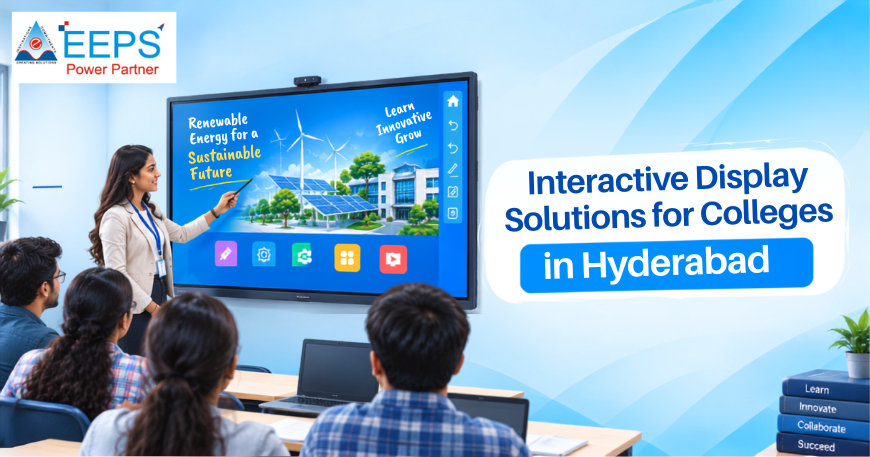
Modern education increasingly focuses on collaboration and active participation. Interactive technology can support this approach by allowing teachers and students to work together on a shared digital screen.
For example, a teacher can display a problem while students contribute solutions directly on the panel. Groups can analyse diagrams, complete interactive exercises, or present their work to the class. This approach can encourage communication, teamwork, creativity, and problem-solving while making classroom activities more interactive.
Technology can help educators organise and deliver lessons more effectively. Teachers can prepare digital content, annotate materials during lessons, display multimedia resources, and save classroom work for later use.
The ability to switch between different resources from a single display can also reduce the need for multiple classroom devices. With suitable training and technical support, teachers can incorporate Advanced Interactive Technology naturally into their existing teaching methods.
Schools should carefully evaluate their requirements before selecting an interactive display. Screen size should be appropriate for the classroom, while display quality should provide clear visibility from different seating positions.
Touch responsiveness, connectivity, operating system capabilities, audio performance, software compatibility, durability, and ease of use should also be considered. Essar Power can support institutions in identifying technology solutions based on their classroom requirements and infrastructure needs.
Digital classrooms are becoming increasingly important as schools adopt new teaching methods and educational resources. Smart classroom technology can complement traditional teaching while providing additional ways to present and explore information.
Interactive Flat Panels for Schools can become a central part of this environment by bringing presentations, digital content, multimedia, and interactive activities together on one platform. Rather than using technology as an occasional teaching aid, schools can integrate interactive displays into daily lessons and classroom activities.
Investing in classroom technology should be viewed as a long-term decision. Schools need equipment that can withstand regular use while continuing to provide reliable performance.
A quality interactive panel can support different subjects, teaching methods, and classroom activities over an extended period. Schools can also maximise their investment by providing teachers with appropriate training and ensuring regular technical support. The right combination of reliable hardware, useful software, professional installation, and ongoing support can help educational institutions build an effective digital learning environment.
Selecting the right technology provider is an important part of implementing a successful smart classroom. Essar Power focuses on providing solutions that meet the practical requirements of educational institutions.
From technology consultation to installation and technical assistance, our team can help schools plan and implement classroom solutions according to their infrastructure and learning requirements. With a focus on dependable technology and professional support, Essar Power helps educational institutions move towards more engaging and digitally connected classrooms.
Looking for reliable Interactive Flat Panels for Schools?
Contact us today for expert guidance, quality solutions, professional installation, and dependable support for your smart classroom needs.
Interactive Flat Panels for Schools support digital lessons, presentations, videos, annotations, and interactive classroom activities.
Interactive Flat Panels for Schools encourage student participation through touch-based activities, multimedia content, and collaborative learning.
Yes, Interactive Flat Panels for Schools can support subjects such as science, mathematics, languages, geography, and social studies.
Yes, Interactive Flat Panels for Schools allow teachers to display presentations, videos, diagrams, documents, and other digital resources.
Essar Power provides Interactive Flat Panels for Schools along with technology guidance, installation support, and technical assistance.



Copyright © 2026 Essar Enterprise Power Solutions | Designed by Web Rocz
WhatsApp us